




What does unclear communication really cost?
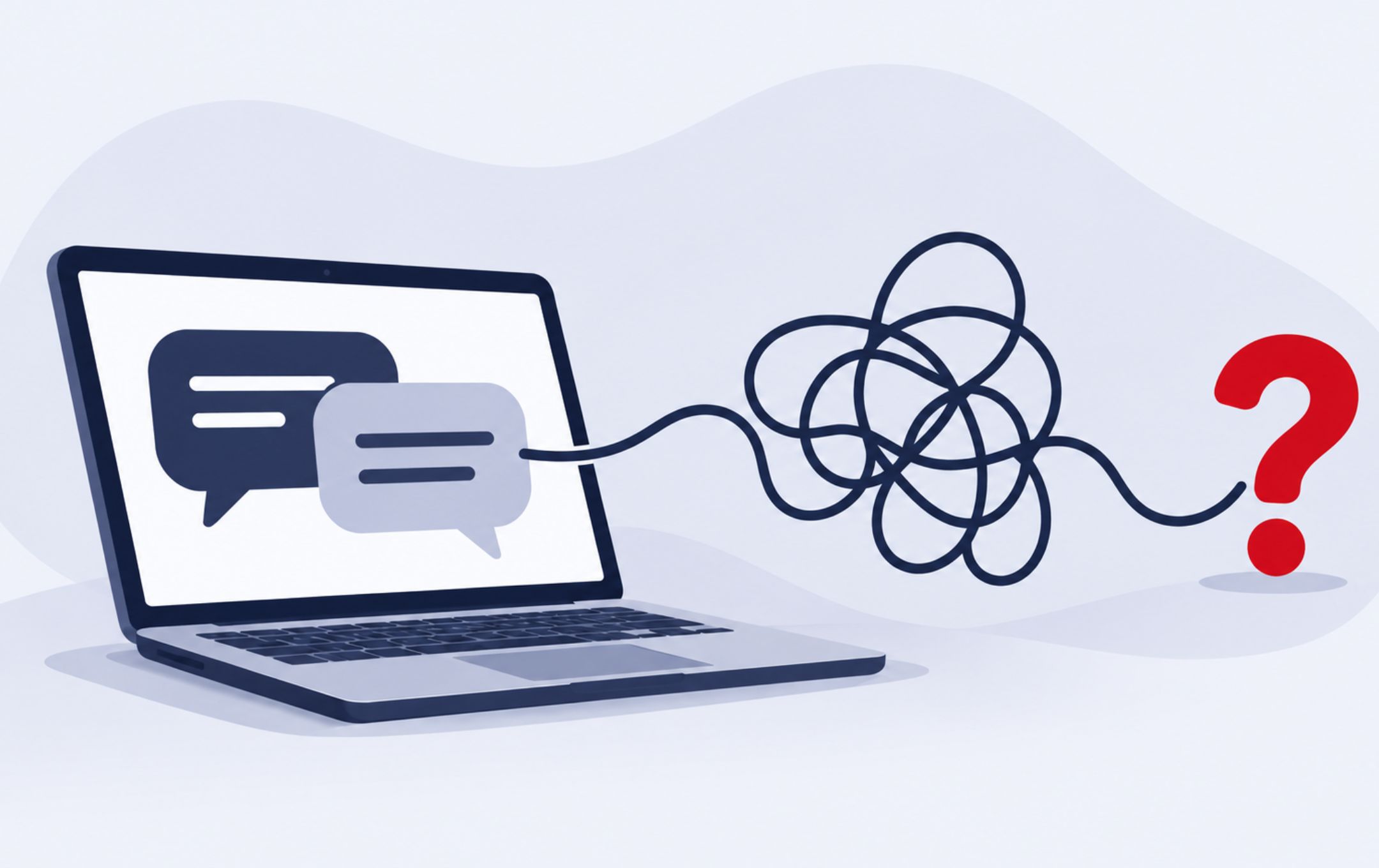
You’ve taken the time to formulate a campaign. The Swedish text feels well-crafted and has your company’s tone of voice, and when it’s translated using AI, the results look good. But does the translated text still have the same ring to it for native speakers of the language?
This is a question really worth asking before any text is published. While all the information may well be included, important nuances often go astray along the way. The natural, convincing language of the original gets lost somewhere in translation, and quite simply fails to give the same impression as the original.
Of course, there’s no easy way to calculate what unclear communication might cost a company other than adding up the cost of the work involved in correcting and publishing a text, but detecting and measuring whether or not a campaign leaves a weaker impression with a potential customer is far more difficult. We need to take both perspectives into account when assessing what a translation actually costs.
Errors in AI translations can be difficult to detect
It’s easy to assess both content and wording when reading a text written in a language we're proficient in. But for obvious reasons, such assessments become significantly more difficult the less fluent and confident we are in a language. Research into machine translation* shows that users who do not fully master both languages are more likely to trust machine translation results than users with a command of both languages, in part because the former lack strategies for assessing quality.
Anyone using machine translation for their own campaign already knows the content of the original, what the campaign means and what the content is intended to convey. The recipient lacks this prior knowledge and must be able to understand and appreciate the message solely on the basis of the translation.
Even without a perfect command of the target language, it’s relatively easy to check product names and values, and make sure nothing is missing. But knowing when an expression is out of place or a formulation has the wrong meaning in a particular context demands greater linguistic skills. Even people who use English on a daily basis often need help assessing that every nuance is correctly captured, especially in texts for general publication.
When the company's tone gets lost in translation
The way a company expresses itself is part of its identity. While son businesses use a personable, accessible tone, others may need to be more formal. Translations must take these nuances into account.
This does not necessarily involve major shifts or changes: a direct appeal may become more distant, specific descriptions may turn into generalisations, or simple sentences take on an unnecessarily complicated structure. While the information remains the same, the text acquires a different character.
In business presentations, it may mean the sense of commitment is lost, while in a product text it may be more difficult to see what distinguishes your product from other options. But if the translated content is reviewed by a native speaker and compared to the original before the translation reaches the end customer, all such subtle changes in nuance will be more easily intercepted.
In the case of sales and marketing copy there are further aspects and additional elements that call for modification. Not only may the wording and tone need to be changed, the content itself may also need modifying in the new language to convey the same image of the company to the target audience.
Does language quality affect customer trust?
Yes! Language quality can be of great importance for confidence and trust in a website. In a European survey*, participants declared they had ceased using certain websites because poor language quality made them distrust the content. The results are based on self-reported experiences and do not show how many business deals companies actually lose.
Companies typically put a great deal of effort into imagery, design and customer approach on their websites. The original content is usually also well-produced and carefully formulated, and all of these elements contribute to the overall impression. When a webpage is translated into another language, the new language should also receive the same care and attention; if a page is perceived as unpolished, readers may get the impression that the company has not taken the time to properly check its work.
While a customer relationship will not stand or fall on a single spelling error, recurring linguistic flaws are a serious matter, especially on pages where new visitors get to know the company and consider contacting it.
It’s helpful to ask yourself: would you publish the corresponding wording in the original language? The same ambition for quality should always be present regardless of the language version the customer encounters.
How much does it cost to rework a translation?
The cost of a translation includes the entire process until completion of a usable text. In addition to the first draft, the content must be reviewed, edited, and proofread before publication.
If errors are discovered later, corrections may affect various informational materials. For example, a product description may be on the website, available as a printed product brochure and already included in the sales department’s presentations. When a central concept has to be changed, someone has to locate all the instances, carry out the necessary corrections and check the results. Depending on the nature of the error, it may also be necessary to review the translations if the content is available in multiple languages.
While a change in the language itself may be minor, the surrounding work will take significantly more time. Language reviewers and staff responsible for content and publication may also need to be involved.
When comparing different translation methods, you should consider the total workload involved. A quick solution does not necessarily mean a text that is ready to use, and may ultimately involve significant additional costs.

AI translation with linguistic review
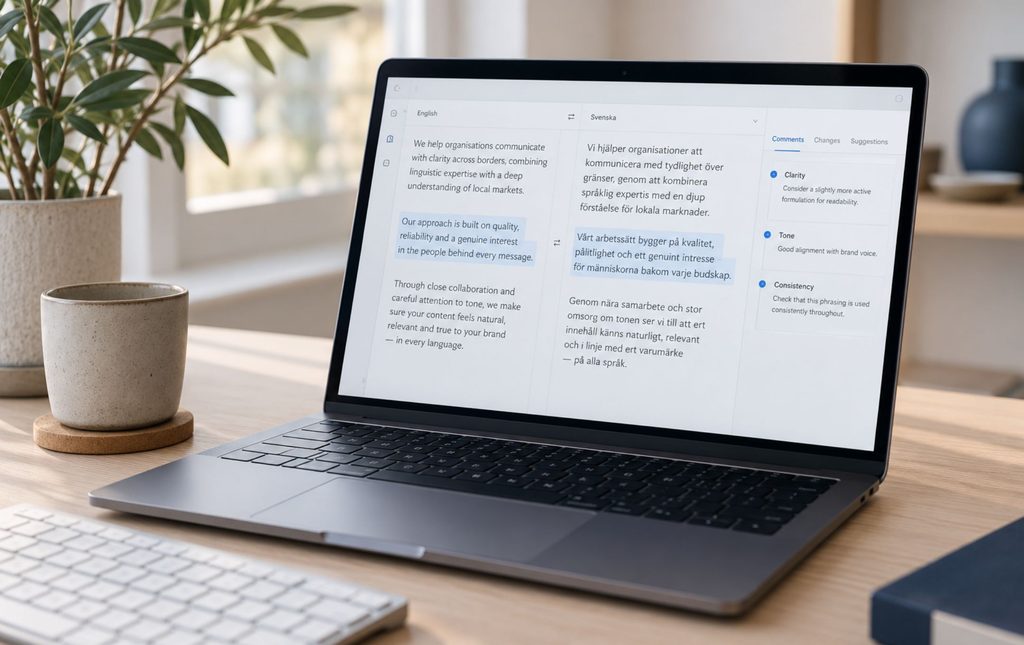
There is definitely a place for AI in a company's translation strategies. One possible approach is to use AI for a first draft and have a qualified translator review and revise the result.
Allow the purpose and target audience to determine the translation model you use. An internal document aimed at providing an overview has different needs than a company presentation intended to spark the customer’s interest. In certain circumstances, internal documents may also require careful checking, for example when serving as the basis for decisions.
If the AI-translated material is extensive, start by having a translator review a short extract to assess the need for further processing. This provides an opportunity to identify recurring issues and estimate what and how much further processing will be necessary.
Among the things a review should check are:
- Content: the content should reflect the original, without the addition or omission of any information
- Word choice: the correct use of terms and expressions for the subject and target group
- Form of address: tone should fit the context and reflects the company's way of expressing itself
- Text flow: wording and language should feel natural and the text be easy to follow
- Clarity: it should be clear what the offer entails and what the reader's next step should be
Spelling and grammar checks cover only a small part of this. A reviewer needs to be able to compare with the original and assess the finished content from the intended reader’s perspective. Sometimes minor adjustments are enough, other times, parts have to be rewritten.
Language review helps put your company's message across
Språkbolaget serves companies and their translation and proofreading needs in multiple languages. We offer everything from proofreading to more comprehensive language adaptation and revision. Based on the assignment, we review aspects such as grammar, terminology, text flow and tone to make sure every text works for its target audience and context.
We also post edit machine-translated texts, in which a translation is reviewed and revised to an agreed level of quality.
Do you have an AI-translated text that you’re unsure about? Feel free to contact us, and we can take a look together at how best to support you and your material.
*Source: ”Toward Machine Translation Literacy: How Lay Users Perceive and Rely on Imperfect Translations”, EMNLP, November 2025. (EMNLP is an annual conference in data linguistics and AI, Empirical Methods in Natural Language Processing.)
*Source: ”Evaluating multilingual digital resources: machine translation adoption and user satisfaction across six European countries”, published December 29, 2025. Survey data was collected in 2024.