




Five signs you need a translation partner, not just an AI tool
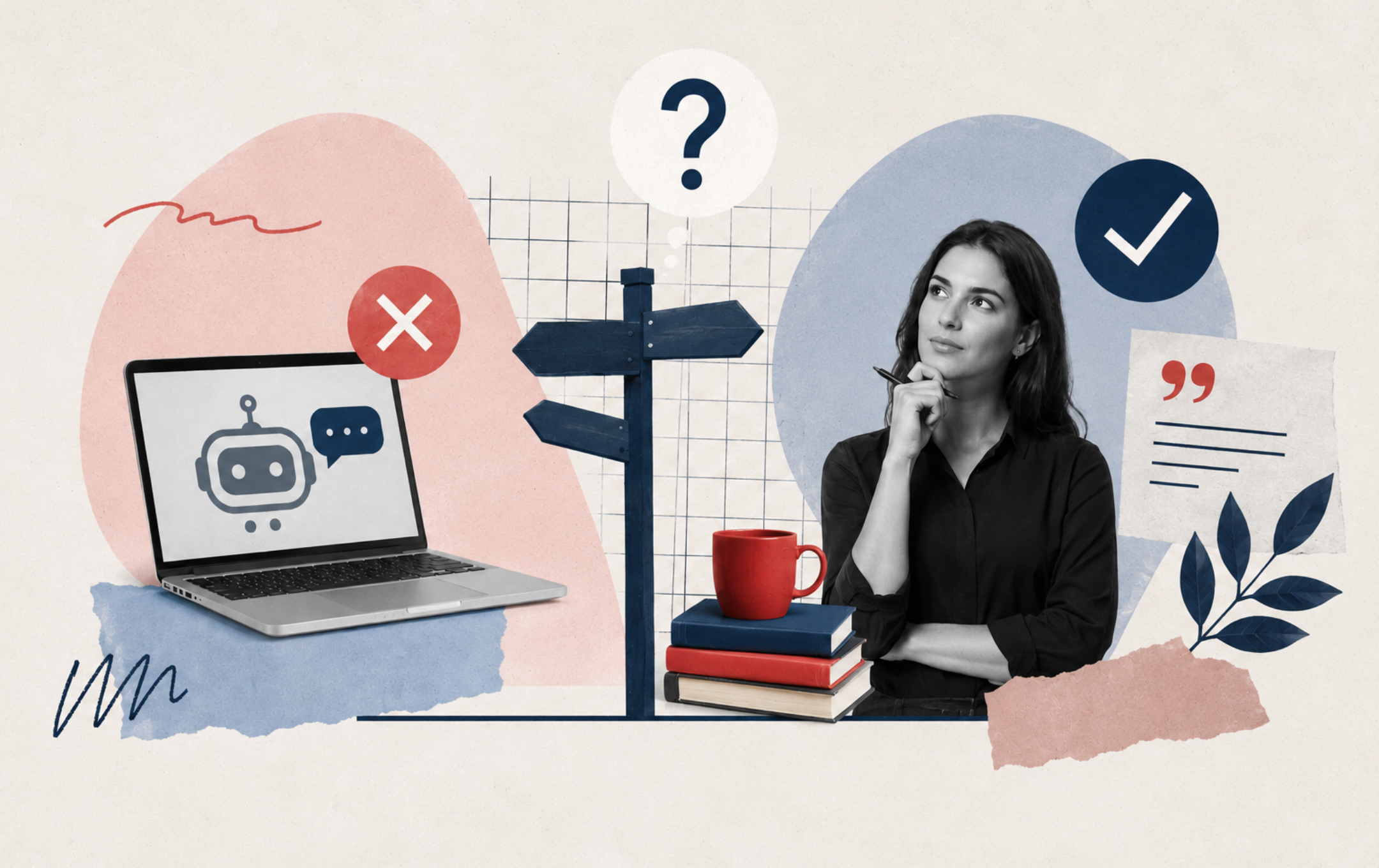
It usually looks something like this: someone in the team runs a text through an AI tool to get it done before lunch; someone else sends a similar document to a freelance translator without checking how such documents were handled last time, while a third person is reading a sensitive client text and wondering who’s actually going to check its quality. Individually, the decisions seem reasonable; together, they make it difficult to hold the whole thing together.
It’s rarely a conscious choice, things just evolve that way, one decision at a time, until no one is in full control of terminology, tone or quality.
Here are five signs that it’s high time to stop dealing with translations on a case-by-case basis, and instead consider what actually distinguishes your one-off translations from those from a proper translation partner.
1. The terminology starts to diverge
While an individual text might appear completely reasonable, maintaining the same terminology, the same tone and the same level of precision across, say, ten texts, five languages and three departments is much more difficult. Without anyone to take overall responsibility, companies often end up with the same product or service being described in several different ways depending on who wrote the text and which AI tool was used.
2. Your employees spend ever more time reviewing translations
AI was supposed to save time, but in practice, AI translations can mean employees in various fields have to spend ever more time checking the wording in languages they may not fully master. Time that would be better spent on their regular duties. And if they also lack the appropriate language skills, there’s a risk that the most significant errors will go undetected.
3. You’re communicating in a language whose quality no one in-house can assure
The more languages a company works with, the harder it will be to find someone in-house who’s actually able to assess whether a translation is up to scratch. The organisation may then find it difficult to determine whether a text is accurate, sounds natural and is tailored to the target audience.
In fields such as medicine, law and finance, it’s not enough for a text to be “more or less right” – a mistranslated dosage, an ambiguous liability clause or a misleading figure in a financial report can have serious consequences if the error goes undetected.
It’s in material like this where the difference between an AI tool and a professional translation becomes most apparent, and where it’s crucial to know who is actually competent to review the text.
4. Recurring content starts again from scratch
Recurring material such as product sheets, terms and conditions, training material and customer communications, should become easier to translate the more often they’re done. In practice, the opposite can happen, especially if each text is handled as a one-off project by a new person, a new tool and a new interpretation of the same terminology. Terms and conditions that were once carefully formulated in English can inadvertently be given a different wording the next time they’re translated, simply because no one remembers – or has access to – how it was done last time.
5. No one knows who’s in charge when something goes wrong
An AI tool cannot itself take responsibility for a mistranslation. Authorised translators, on the other hand, are covered by clear professional requirements and must carry out their assignments in accordance with good translation practice, as does a reputable translation partner. In Sweden, the Legal, Financial and Administrative Services Agency (Kammarkollegiet), which authorises translators, has established that authorised translators always bear full responsibility for their translations, regardless of whether a translator's stamp has been used or not.11 No corresponding responsibility exists with AI tools, which makes the issue of liability increasingly important the more AI is used in the workflow. Furthermore, reputable translation agencies have professional indemnity insurance should anything go wrong.

What does a translation partner do that an AI tool cannot?
While an AI tool can translate a text, it cannot hold together the entire surrounding process. A translation partner helps to choose the right method and the right linguistic expertise based on a text's content, its target audience and area of application.
This may involve managing and maintaining the company's terminology over time, selecting the right translator for the subject matter and reviewing the material at a level corresponding to the risks and quality requirements. The partner can also assess when AI can provide suitable support and when the text must be handled in another way.
Many organisations and companies have guidelines regarding how to handle AI translations. For example, Uppsala University recommends that all AI-translated texts be reviewed and edited before publication. Texts aimed at external target audiences also require review by someone who possesses good subject knowledge and a very good command of the target language.2
For a company, these practical questions remain: who should conduct the review, what level of expertise is needed and what quality requirements should apply? A translation partner can take responsibility for such considerations while also coordinating project management, file handling, layout, confidentiality and delivery.
A translation partner to handle the whole process
The five signs above rarely concern a single issue, it’s rather the combination itself – inconsistent terminology, wasted time and resources, a lack of continuity, and uncertainty about who carries out quality assurance and has overall responsibility – that makes translations difficult to keep together.
Do any of these signs apply to your company? Språkbolaget can help you choose the right method, compile the terminology and coordinate the right language expertise from the very first text to final delivery.
Read more about how we work, or Contact us for a no-strings-attached meeting.
Bibliography
- Legal, Financial and Administrative Services Agency, ”Good Translator Ethics” (The Legal, Financial and Administrative Services Agency's advice to authorised translators). https://www.kammarkollegiet.se/om-oss/kammarkollegiets-uppgifter/auktorisation-av-tolkar-och-oversattare/god-translatorssed ↩︎
- Uppsala University, ”AI and translation”
https://www.uu.se/en/staff/service-and-tools/communications-and-marketing/style-guides-and-language-support/ai-and-translation ↩︎