



Swedish Women's Voluntary Defence Service – a cog in Sweden's defence machine, and a gateway into society for newly arrived women
”It was important for us to find a partner with experience from our industry in order to make sure the terminology was correct. Språkbolaget led us throughout the process and delivered quality in a very short space of time. Now we’re looking forward to reaching out to new target audiences. ”
Maria Öst, Communications Officer, Swedish Women's Voluntary Defence Service
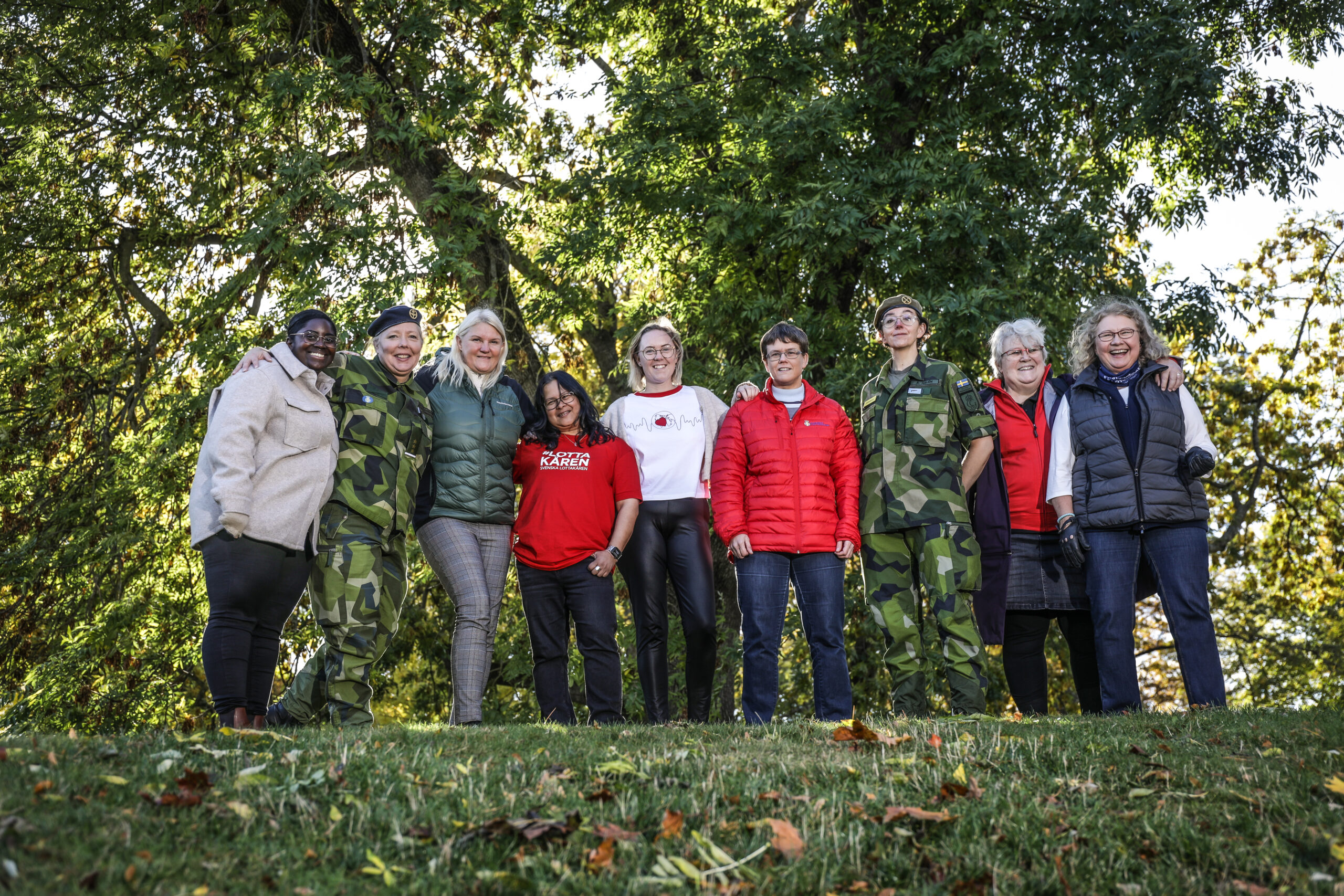
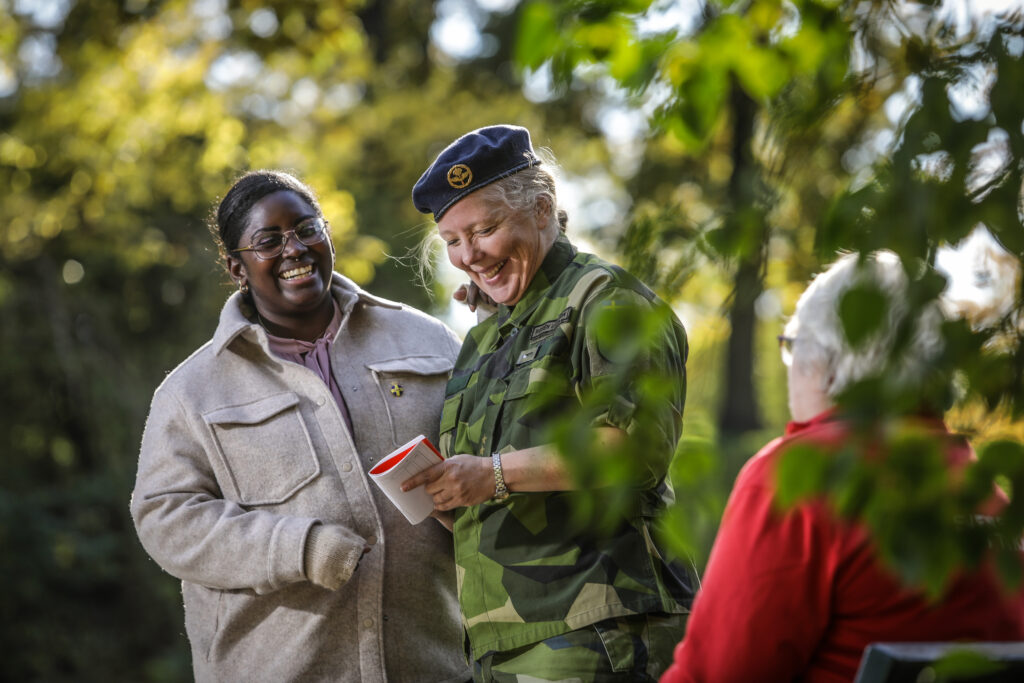
The Women's Voluntary Defence Service is an important part of Sweden's total defence philosophy. The organisation was formed in 1924 and recently turned 100. The service organises women across a wide age range who want to make a contribution to the nation’s defence, and its numerous tasks.
Total defence involves everyone who lives in Sweden, regardless of citizenship and background, and in today's uncertain world situation with its many conflict zones and the war in Ukraine not far from our borders, the service, also known as the Lotta Corps, is more relevant than ever.
Because the Corps seeks to broaden its recruitment, it has chosen to translate parts of its informational material into Arabic, Somali and English. Arabic is currently Sweden's second most spoken language, Somali is growing rapidly and English is a lingua franca for many groups. Many women with Arabic and Somali as their native languages are highly motivated to contribute to their new homeland, and the Swedish Lotta Corps can act as an important way for them to integrate into society and learn Swedish more quickly.
We speak to Maria Öst, communications officer at the Women's Voluntary Defence Service:
Tell us a little about the Swedish Lotta Corps and who you are
“The Corps is a voluntary defence organisation that brings together women in a strong sense of fellowship that helps to strengthen the country's resilience,” says Maria Öst. “We inform, educate and train to strengthen women and society in day-to-day life, in crises and war. As members, women gain knowledge and an ability to contribute to their local communities or our national preparedness. We work to strengthen our fundamental democratic values through school activities, corps activities, study circles and our podcast, Lottapodden. We believe that when women understand their freedoms and rights, they will also want to help defend them. Not necessarily with weapons, but by actively contributing to the entire total defence. We turned 100 in 2024, and now we’re building for the future in this troubled world we live in.”
What are your thoughts about translation, and what do you hope to achieve by it?
“With the world around us so unsettled, we note that in our mission of spreading awareness of total defence, we also need to reach out to target groups that do not have Swedish as their first language, and the translation of our basic brochure was the first step,” replies Maria Öst. “Now we’re better able to meet new target groups at trade fairs and similar events.”
What was most important for you when choosing a translation partner?
“Everything felt dependable and professional right from the outset, and toward the end, you were the only people who kept the discussion going,” says Maria Öst. “And because we’re part of the defence sector, it was also important for us to work with a supplier who had experience in our field.”
Translating Swedish texts into Arabic and Somali forms a small but rapidly growing part of the Swedish language industry. The task has its own specific challenges; it’s poorly suited to AI, and it’s vital to know which translators know their stuff. In the case of the Swedish Lotta Corps, finding a supplier was not particularly easy, and ultimately, Språkbolaget was the only agency prepared to take on the assignment. We ask Monia Ly, project manager at Språkbolaget:
What was the specific assignment?
“It concerned translating the leaflet Join the Lottas and various other informational material into Arabic, Somali and British English,” explains Monia Ly. “Translating into English is straightforward, but Arabic and Somali are a completely different story. The languages have many first-language speakers in Sweden, many more than English, for example. At the same time, it’s difficult to find skilled translators for those languages. One of Språkbolaget's most important contributions to the project was knowing where the right talent can be found.
What did the process look like?
“Initially, like an ordinary translation assignment,“ says Monia. “Naturally, we only use native-speaking translators with documented skills, and as an extra quality assurance measure, the texts are also reviewed by an additional translator. The customer took care of the layout and design in English and Somali, which largely involved inserting the translation into the existing layout. However, Språkbolaget was entrusted with the layout of the Arabic translations, and there’s a great deal that can go wrong here.”
What are the problems that can arise?
“Somali uses the Latin alphabet from left to right, and in this regard is straightforward,” says Monia. “But the written language is relatively new and because it lacks terms for many phenomena, translators and reviewers may have the task of establishing new terms.”
“While Arabic has a richer vocabulary and a well-established common written language, it is written from right to left,” continues Monia. “On the other hand, all numerical values our written from left to right. Printed publications are read from what we usually call the last page to the first. Thus, changing the text direction it is not enough –the entire layout has to be rearranged to preserve the logic. And in a project like this, the text passes through many computers, so it’s extremely important that all computers involved have the correct fonts and language support installed. Otherwise, errors can occur that are impossible to spot for someone who does not know Arabic, but which make the result totally incomprehensible.”
What role does the project manager play?
“In the case of migrant languages where many steps are involved, we always need to know precisely where we are in the process,” emphasizes Monia. “As I said, a lot can go wrong, the errors are difficult to spot and they get out of hand quickly if we don't deal with them right away.”
“The process has been very transparent on your part, and we appreciate that,” adds Maria Öst.
“Perhaps one of a project manager's more important contributions to a project like this is the personal contacts with the client, the translators and the reviewers,” says Monia. Språkbolaget knows where to find the right suppliers, we know them all personally and we know what they’re good at.”
What impressions and experiences has the project left you with?
“One important insight, one we already knew but which this project emphasized, is that AI is nowhere near enough when working with low-resource languages, i.e. languages that lack large language models, as in the case of Swedish to Somali and Swedish to Arabic,” says Maria Lachonius, founder and CEO of Språkbolaget. “AI can certainly provide a general idea of what a text is about, but it stops there.”
“But there’s another aspect to the project that appeals to us,” continues Maria. “Språkbolaget has an exclusively female staff; it was never an end in itself, it’s just how things turned out. So it’s especially rewarding to do a project for a women's organisation like the Swedish Lotta Corps, a project aimed, what’s more, at women who want to join Swedish society and contribute to it.”
And how did things turn out?
“Everything went very smoothly and the end result looks great,” says Maria Öst. “It’s going to be really satisfying to begin using the brooches and see what results they bring.”
It was important for us to find a partner with experience from our industry in order to make sure the terminology was correct. Språkbolaget led us throughout the process and delivered quality in a very short space of time. Now we’re looking forward to reaching out to new target audiences.